
Economic and social aspects
In this article below, you can read about research to how woman are affected by gender inequality in Europe. The question for this research was in the first place, is there a lot of gender inequality in Europe, if yes, how are woman impacted by this?
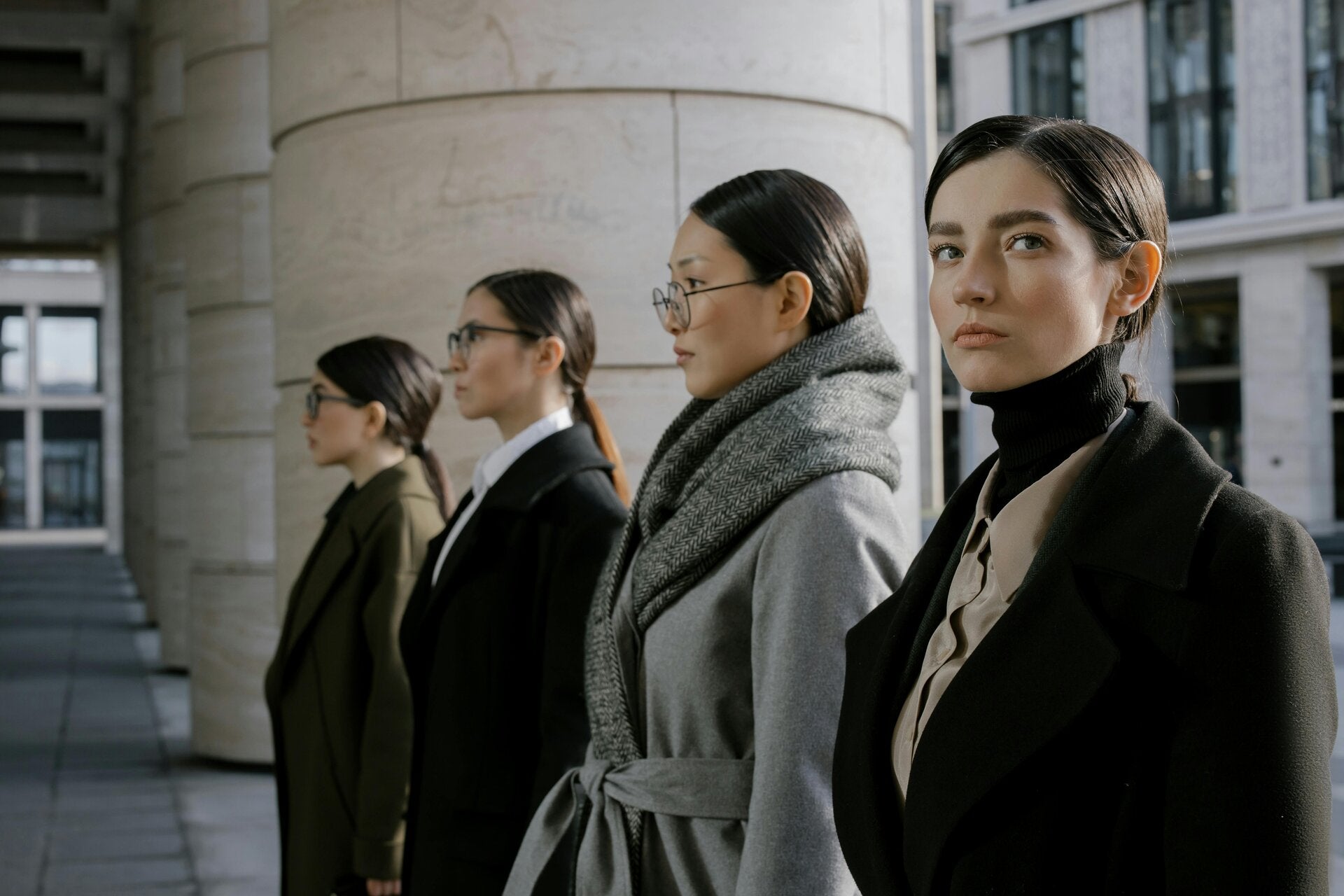


The impact of persistent gender inequality on woman’s economic and social opportunities in Europe
Gender equality is widely recognised as an important value of the European Union, and over the past decades, Europe has made meaningful progress toward improving women’s rights and opportunities. Women today are more educated, more politically active, and more present in the labour market than ever before. Yet, despite these advances, gender inequality remains a persistent reality across European societies. This inequality continues to shape women’s economic security, career prospects, and social participation in ways that are often subtle, and long-lasting. Persistent gender inequality does not simply affect statistics; it shapes everyday experiences. It influences how women move through education, employment, family life, and public spaces. By examining women’s economic participation, unpaid care responsibilities, leadership representation, and broader social consequences, it becomes clear that gender inequality in Europe remains a structural challenge with significant human and economic costs.
Want to read more? Click the link below!
https://newuniversity-my.sharepoint.com/:w:/r/personal/minke_kuiper_student_nhlstenden_com/Documents/individual%20research%20minke.docx?d=wa3319a37fbb241d2ab47ce408e9f16c3&csf=1&web=1&e=XqDDoR
Individual research done by Minke Kuiper
The social aspects of gender equality
With gender equality we mean that men and women deserve the same rights, the same opportunities, and possibilities in the society. In some countries it is written by law that there needs to be gender equality looking at work and education. In a lot of other countries this is not the case, and they still look at men and women in a traditional way. This means that they think that women belong at home, taking care and cleaning, while the men work for the money. In different cultures people think different about what is fair when it comes to the roles of men and women in daily life. So, gender equality is not only a legal issue, but also a big social one.
Want to read more? Click the link below!
Individual research done by Maud Wiedenhoff
Interview with Carolina Lopez
In this article, we are going to meet Carolina Lopéz. She is currently working in Spain as a criminal lawyer. I had the unique opportunity to talk with her about gender equality in case of her work, where I am going to talk with her what things she is experiencing in her daily life and work, how she see how things are going in Spain and what could be changed and, at least how she thinks that the European Union have helped development and reach the goal towards gender Equality.
Gender equality in her work as a criminal lawyer
In general terms, she sees that female lawyers in Spain are "pigeonholed" into other branches of law, such as family law or commercial law. However, there are women who are criminal lawyers, as in her case. The only thing you must do to be valued and respected is to demonstrate your worth and knowledge in court, and words will spread. As she mentions, "if you demonstrate your ability to tackle legal challenges, people will generally respect you." However, there are always exceptions. In her case, when I have not been treated as I should have been treated. It has not been because I am a woman, but because the judge or prosecutor treats everyone, they consider inferior badly.
As for our clients, they have immense respect for the lawyer who represents their interests. Let's not forget that in criminal law, you deal with clients who are alleged criminals. Whom, you have to get out of jail when they are arrested so that they can be released on bail until the trial date, or whom you have to get out of prison because they have been convicted fairly or unfairly.
She doesn't see structural barriers for women that see encounter in her daily life job. She thinks because she always has been very decisive and confident in my work. That helps people treat you the way they should. In her office, the only thing that matters is that you solve cases with the utmost diligence, regardless of gender.
The differences with regard to gender are most noticeable when judging a man or a woman. For example, in cases of gender violence, it is assumed in most cases that the man is guilty, often without even hearing his testimony. When a woman files a complaint for gender violence in Spain, a restraining order is automatically issued and, if the couple has children, the father is prohibited from seeing his children until the case is resolved. The worst part is that it can take years for the trial to be scheduled and he may end up being innocent because many complaints are false.
Her view on gender equality in Spain
In fact, there is a certain degree of inequality in Spain. A clear example of this is that the vast majority of senior positions in companies are held by men.
There are legal "delays" that the Spanish government has implemented, which clearly weaken the position of women in the workplace. We have been granted rights that are more like punishments, discouraging companies from hiring women because they have more rights than men and can leave work earlier. Cultural factors continue to have a significant influence, especially through persistent gender stereotypes that affect the division of roles, work-life balance, labor participation, and access to positions of responsibility.
When I asked her: How effective do you consider current Spanish laws on gender violence and discrimination to be?
She answered "As I mentioned earlier " in cases of gender violence, it is assumed in most cases that the man is guilty, often without even hearing his testimony. When a woman files a complaint for gender violence in Spain, a restraining order is automatically issued and if the couple has children, the father is prohibited from seeing his children until the case is resolved. The worst part is that it can take years for the trial to be scheduled, and he may end up being innocent because complaints are false."
The problem is that, even if the accused is guilty, the measures that are put in place, such as wearing an electronic bracelet that is supposed to ensure that the man does not breach the distance barrier with the woman, are not sufficient, as they are often faulty and inaccurate. But also she thinks Spain should not protect women too much or, in this case, place them in a special position. False complaints can also cause a lot of suffering.
There is a clear inequality, as the vast majority of senior positions in companies are held by men. The legal sector, at least the criminal law sector, is led by men, but mainly because of the danger that can be involved in defending criminals such as murderers, rapists, fraudsters, traffickers, etc.
When I asked her:" What social changes do you think are necessary to achieve real equality? " She said, the fundamental issue is that, at national level, men and women should have the same legal rights. As long as the government continues to "overprotect" women with absurd laws, companies will want to hire more men than women.
From her own point of view, she doesn't experience differences in urban zones and rural zones but, she believes that there may be differences between cities and villages. However, she emphasizes that this has to do with the culture in which they live and how they were raised. There are no places that can be identified as having more or less gender equality.
Her view on gender equality in Europe
Spain ranks among the European countries with an advanced level of gender equality. Especially in the areas of legislation and public policy. Although as mentioned before, challenges remain in terms of effective equality and in the labor market. She mentions that countries such as Sweden, Finland, Norwegian and Denmark are benchmarks due to their robust welfare system, advanced work-life balance policies, and high levels of female participation in decision-making.
When I asked her: Are there any European regulations or guidelines that, in your opinion, have had a significant impact on gender equality in Spain? She said: yes, European directives on equal pay, non-discrimination, and work life balance have had a significant impact on legislative and political developments in Spain.
Europe has made significant progress, but cross-border cooperation and the consistent implementation of measures need to be strengthened in order to combat gender-based violence and discrimination effectively.
Initiatives aimed at equal pay, shared responsibility for caregiving, and the harmonization of minimum standards of protection against gender-based violence would be particularly relevant.
She believes Spain is on the right track. Steps have certainly been taken, and developments have taken place, but there are still challenges that need to be addressed or solutions that need to be found. She believes if Spain and The European Union can work together on better solutions, that maybe shouldn't make or put women in an special position it would be easier to become equal. With current laws that are being installed, it can work also in the opposite of what they want to achieve. Careful consideration must be given to what works and what they want to achieve.
Interview done by Richard Randag

Create Your Own Website With JouwWeb